
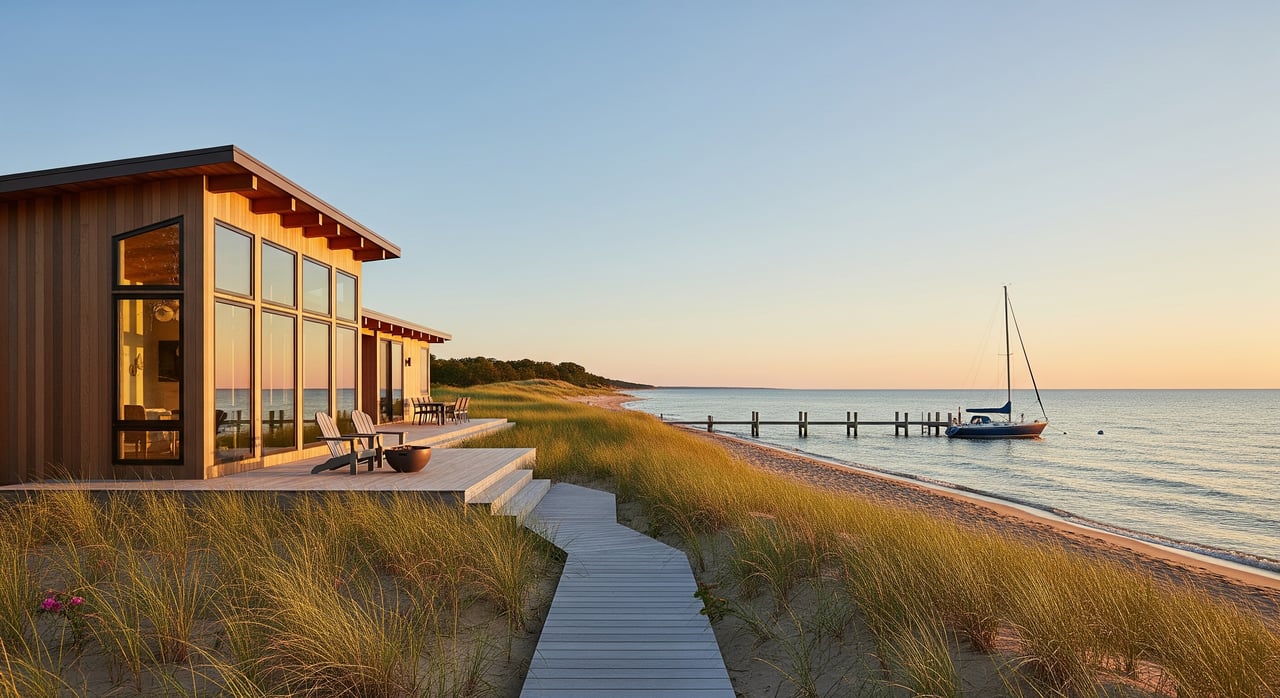
Picture this: a Friday afternoon drive, a quiet turn off the highway, and your weekend begins with a stroll along the Kalamazoo River and dinner under twinkle lights on Butler Street. If you’ve been imagining a place where art galleries, sand dunes, and boat slips set the pace, Saugatuck delivers. At the same time, owning a second home here comes with seasonal rhythms and practical details that work best when you plan for them. In this guide, you’ll get a clear look at the lifestyle, logistics, and ownership tips that help you enjoy a Saugatuck retreat with confidence. Let’s dive in.
Why Saugatuck works for second homes
Saugatuck sits on Lake Michigan at the mouth of the Kalamazoo River, with the Village of Douglas just across the water. The area is known for a vibrant arts-and-gallery scene, riverfront dining, and walkable downtown streets. Many owners love the quick access to beaches and dunes for sunrise walks and late-afternoon swims.
Access is a major draw. You can reach Saugatuck by car from large Midwest cities in a few hours, which makes weekend use realistic. The Amtrak Pere Marquette line connects Chicago and Grand Rapids, and Gerald R. Ford International Airport serves most commercial flight needs in the region. Once in town, you can park the car and explore on foot, by bike, or via the historic chain ferry that crosses the river when in season.
The rhythm of the year
Saugatuck’s energy shifts with the seasons. Late spring through early fall is peak time. From Memorial Day to Labor Day, you’ll find full restaurant hours, busy galleries, and more visitors at the beaches. Spring and fall bring steady activity and cooler nights. Winter is peaceful and quiet, with many shops on reduced hours or closed until spring.
This pattern affects daily life. Summer parking is tighter and reservations help for popular restaurants. Contractors and trades can be busier in warm months, so it pays to book projects ahead. Many second-home owners lean into the contrast: lively summers with guests and boat days, then restorative shoulder seasons with empty trails and cozy dinners in.
Day-to-day lifestyle
Beaches, dunes, and trails
You’ll have easy access to Lake Michigan beaches and dune areas for swimming, sunbathing, hiking, and photography. Oval Beach and the nearby dune systems are popular for good reason. Lake conditions vary by day and season, so expect changing water temperatures and wind.
Boating and fishing
The Kalamazoo River provides boat access to Lake Michigan, with marinas and public launches available. If boating is central to your plan, check on slip availability, waitlists, and marina rules before you buy. Transient slips can be limited in peak months.
Arts, dining, and shopping
Downtown Saugatuck is known for independent galleries, artist studios, boutique restaurants, and local wine or beer bars. Offerings expand in summer and operate more selectively in winter. Part of the joy is discovering new small businesses as the season unfolds.
What you’ll find in the housing stock
You’ll see a mix of historic cottages, bungalow-style homes, condos and townhomes, riverfront properties, and newer or renovated lake houses. Some are small, low-maintenance retreats. Others are larger homes designed for multigenerational gatherings or seasonal living.
Location drives pricing in this market. Waterfront and walkable downtown properties command premiums. Limited inventory in a small community can create competition for move-in-ready homes, especially in summer. Buyers also purchase older cottages and invest in updates that bring modern comfort or meet short-term rental standards when allowed.
Ownership costs and care
Taxes and insurance
Property taxes in Michigan are set by local jurisdictions, and rates can vary by municipality and school district. Allegan County and local assessors can provide parcel-specific estimates. Insurance costs are influenced by proximity to the water and property characteristics. Ask insurers about lake-effect wind and hail coverage, vacancy policies for second homes, and flood insurance requirements if the property is in a FEMA flood zone.
Utilities and winter care
If you will not occupy the home year-round, budget for winter heating, snow removal, and seasonal maintenance. Winterization is critical. Draining water lines, addressing plumbing traps, and setting HVAC systems correctly helps prevent freeze damage. For peace of mind, many owners use a property manager for periodic checks or guest turnover.
Exterior and shoreline considerations
Lakefront and dune-adjacent homes face unique conditions. Sand and salt can accelerate wear on decks, HVAC units, and exterior finishes. Shoreline erosion can require attention and permits if reinforcement or structures are needed. In Michigan, shoreline work and dune disturbance often require permits through state agencies, and some projects may involve federal review if navigable waters are affected.
Short-term rentals: know the rules
Short-term rentals are popular in lake towns, but rules vary by jurisdiction. In the Saugatuck and Douglas area, you may encounter licensing, inspections, occupancy limits, or caps. Enforcement can differ between village, township, and county. Before you buy, confirm which municipality governs the property and review its ordinances. If you plan to operate a rental, you may be responsible for collecting and remitting applicable taxes.
If you prefer a hands-off approach, local property management firms can handle bookings, guest communication, cleaning, maintenance, and winterization. This support is especially helpful when you live out of town or split time between markets.
Practical due diligence checklist
Use this checklist to streamline your process and avoid surprises:
- Confirm the property’s municipal jurisdiction and review its ordinances for short-term rentals, parking, signage, and occupancy.
- Verify utilities and system types: public water and sewer or well and septic. Request past inspections, permits, and any well test results.
- Ask for insurance quotes, including vacancy options and flood coverage if the property is in a mapped flood zone.
- Review shoreline and erosion history. Check permit status for any docks, seawalls, or riprap on the property.
- Gather utility histories and seasonal occupancy details. Confirm whether the home has been regularly winterized.
- Understand parking availability and any restrictions that could affect owner use or guests.
- Contact marinas about current slip availability, waitlists, and seasonal rules.
- Interview property managers if you plan to rent or if you want regular home checks and maintenance.
Getting here and getting around
Driving from major Midwest hubs makes weekend trips realistic. The Amtrak Pere Marquette route offers a car-free option if you prefer train travel. You can also fly regionally into Gerald R. Ford International Airport and drive the final stretch. In peak months, allow extra time for traffic and parking. When operating, the small chain ferry is a memorable way to cross the river and explore both Saugatuck and Douglas on foot.
Is it right for you?
Saugatuck works for many types of owners. Weekenders love the easy drive, small-home convenience, and walkable downtown. Retirees and seasonal residents often choose larger or renovated homes and lean into the area’s arts and outdoors. Investors focus on properties and locations that align with local rental rules and guest demand.
Summer comes with crowds, but many owners enjoy the vibrant scene and then savor quieter shoulder seasons. If you appreciate artful small-town energy, water access, and a relaxed pace, Saugatuck is a strong candidate for your second home.
How Tammy Kerr helps second-home owners
Choosing the right advisor simplifies everything from search to setup. With a design-and-data approach and deep lakeshore expertise, Tammy helps you target the property type and location that match your lifestyle and goals. You get clear guidance on renovation potential, staging for turnkey appeal, and vendor coordination that saves time.
- Buyer representation focused on waterfront and vacation properties
- Property management and vacation rental oversight when you need hands-off operations
- Renovation and design advisory to create value and comfort
- Investor support and 1031 exchange guidance for portfolio strategy
- Cross-market continuity between West Michigan and South Florida if you split your time
If you want a second home that feels effortless, you need a plan for seasonality, maintenance, and local rules. Tammy’s concierge model helps you cover the details so you can enjoy the sunsets and sand.
Ready to explore Saugatuck with a local expert and a clear strategy? Connect with Tammy Kerr to map your next steps.
FAQs
What months are busiest for Saugatuck second homes?
- Late May through September is peak season, with shoulder seasons in spring and fall and a quiet winter when many shops reduce hours or close.
Are short-term rentals allowed in Saugatuck and Douglas?
- Rules vary by municipality and may include licensing, inspections, occupancy limits, or caps. Confirm the property’s governing jurisdiction and review its ordinances before you buy.
How available are boat slips on the Kalamazoo River?
- Marinas and public launches serve the area, but slip availability can be limited in peak season. Contact marinas early to understand waitlists and seasonal policies.
What hidden costs should second-home owners budget for?
- Common items include winterization, seasonal wear and repairs, higher insurance for waterfront locations, property management fees if renting, and potential shore protection costs.
How do I protect a vacant home in winter?
- Winterize plumbing, set HVAC appropriately, and consider periodic property checks. Many owners hire a property manager for maintenance and emergency response.
Where will I find everyday services and healthcare?
- You’ll find grocery and basics in town, with larger shopping in nearby cities. Clinics and emergency services are available in the region, while major hospitals are in larger nearby cities.
Is Saugatuck better for weekend use or full-time living?
- It depends on your priorities. Weekenders value easy access and low-maintenance homes. Full-time residents should assess winter services, healthcare access, and year-round needs before deciding.