
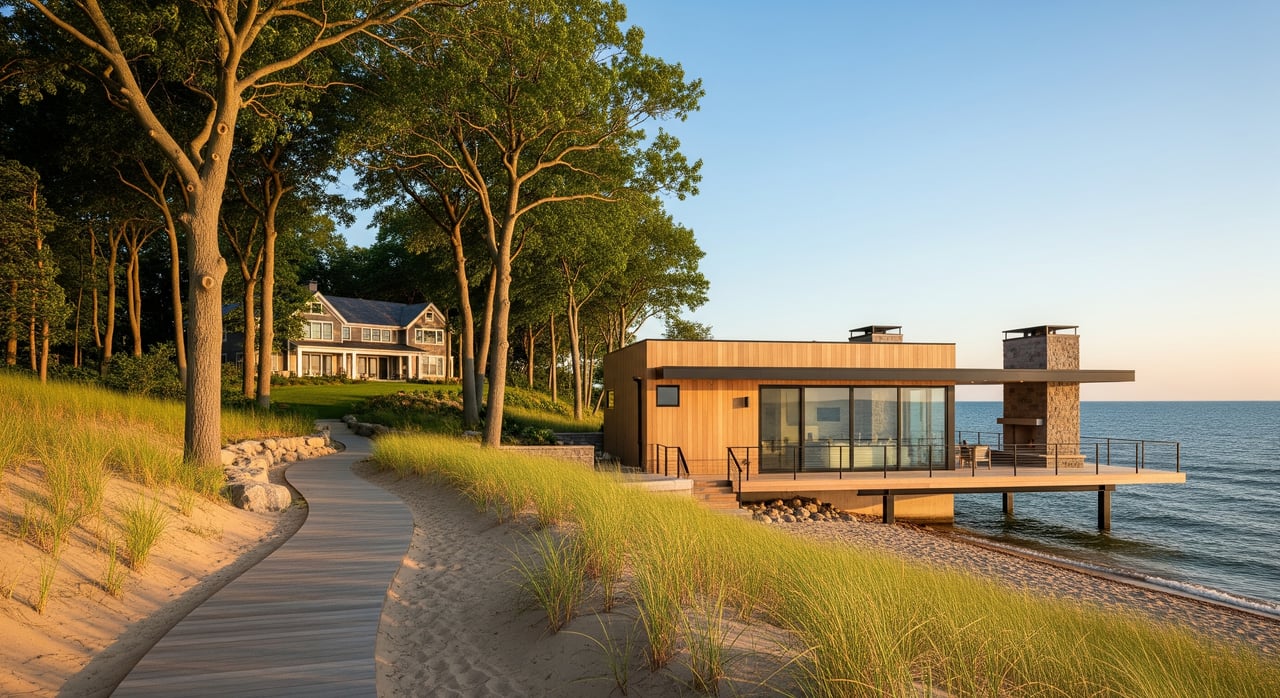
If you love the idea of waking up near the water in Covert, you are not alone. The big question is whether a true waterfront home or a near‑water property fits your life better. Both can deliver the West Michigan lakeshore lifestyle, but they differ in rights, rules, costs, and everyday feel. In this guide, you will learn the tradeoffs, the must‑know regulations, and the steps to verify any parcel in Covert before you buy or sell. Let’s dive in.
What “waterfront” means in Covert
Waterfront usually means your lot touches the water and you have direct, private access. In Michigan, this can include inland lakes, rivers, or Lake Michigan frontage. Exact rights depend on your deed and local rules, so do not assume a dock, mooring, or beach use without checking.
On inland water, owners often have riparian rights that can allow reasonable use and some structures if permitted. Along the Great Lakes, public trust principles and regulated high‑water lines can affect what you can build and how you use the shoreline. Understanding these differences is essential before you make an offer.
What “near‑water” means
Near‑water properties sit close to a lake, river, or shoreline but do not touch it. You may have water views, a quick walk to the shore, or deeded/shared access through an easement or association. Many buyers choose near‑water for a lower purchase price, fewer maintenance obligations, and easier insurance and financing.
If you want the vibe and convenience of the water without the full responsibility of shoreline ownership, near‑water can be a smart move.
Key rights, rules, and permits
Riparian and littoral rights
On inland lakes and rivers, riparian rights apply to waterfront parcels, though details sit in your deed and title documents. Along the Great Lakes, public trust and defined elevation lines influence use, access, and construction near the shore.
Permits and agencies
- Shoreline work, docks, seawalls, dredging, and wetland impacts often require state review. You can start with the Michigan Department of Environment, Great Lakes, and Energy’s guidance on permits and programs at the Michigan EGLE website.
- Local zoning can add setbacks, height limits, and rules for accessory structures. Always check with Covert Township and Van Buren County before planning projects.
Floodplains and erosion
Your lender may require flood insurance if any part of the structure sits in a mapped flood zone. You can review official flood maps at the FEMA Flood Map Service Center. Great Lakes or bluff‑adjacent sites should also be evaluated for erosion and slope stability before closing.
Septic, wells, and shared access
Rural waterfront homes often use well and septic systems. County health rules govern placement and repairs, especially near the water. If access is shared, verify easements, maintenance duties, and use rules in the recorded documents.
Costs and value: what to expect
Purchase price and taxes
Waterfront homes often sell at a premium compared with near‑water options. That premium boosts taxable value, so budget for higher property taxes. Near‑water homes can deliver views or walkable access at a lower price point.
Insurance and maintenance
- Flood insurance may be required in mapped zones and can add to your annual costs.
- Waterfront can include added upkeep for docks, shore protection, and vegetation management. Costs can recur and may require periodic permits.
- Near‑water often sees lower operating and maintenance expenses, which can widen your buyer pool at resale.
Appraisals and resale
Waterfront appraisals rely on true waterfront comparables. In smaller or rural sub‑markets, comps can be limited, which may increase lender scrutiny. Near‑water homes often appeal to a broader audience, which can support smoother resale.
Lifestyle tradeoffs
Recreation and access
- Waterfront gives instant access for boating, fishing, and swimming if your rights and permits allow.
- Near‑water may offer the same activities through shared or deeded access, but docking rights are usually limited.
If you are an active boater or angler, research access type and waterbody rules. The Michigan DNR publishes information on public launches and fisheries.
Privacy and activity levels
Some waterfront lots feel very private, while others sit near public access or busier boating corridors. Near‑water streets can be quieter, especially if they are not primary access points for day‑use visitors.
Seasons and weather
Winter maintenance, lake‑effect wind, and ice can hit waterfront homes harder. Near‑water homes often experience milder exposure while still enjoying four‑season views and proximity.
Water quality and habitat
Algae blooms, aquatic plants, and invasive species can affect clarity and recreation. For context on local conditions and best practices, start with EGLE programs at the Michigan EGLE website and educational guidance from MSU Extension.
Verify a property’s water relationship
Before you fall in love, confirm the details. A simple checklist can save time and protect value.
Step‑by‑step verification
- Pull the deed and legal description to confirm frontage and any recorded water access or easements.
- Order a boundary survey that shows the waterline, encroachments, and any shared access points.
- Review flood status at the FEMA Flood Map Service Center; request an elevation certificate for precise risk.
- Contact Covert Township and Van Buren County to confirm zoning, shoreline setbacks, and rules for docks or accessory structures.
- Consult the Michigan EGLE website for permit history and requirements for any proposed shoreline or wetland work.
- Check public access, fisheries, and launch information through the Michigan DNR.
Buyer due‑diligence checklist
- Get a title commitment and review easements, deeded access, and restrictions.
- Order a land survey to confirm boundaries and proximity to water.
- Verify riparian or littoral rights in the deed and with your title company.
- Check FEMA maps and get flood insurance quotes if needed.
- Inspect shoreline conditions and obtain estimates for any repairs.
- Test well water and inspect the septic system; gather maintenance records.
- Request documentation for any past shoreline permits or alterations.
- Confirm zoning setbacks and any lake association or HOA rules.
- Review water quality background and invasive species reports when available.
- Prepare for financing with an appraisal that uses appropriate comparables.
Seller prep and disclosures
- Gather permits and records for docks, shore work, and septic or well upgrades.
- Consider a recent survey to clarify boundaries and access.
- Disclose known flooding, erosion, access disputes, and environmental issues as required by Michigan disclosure law.
- If the home is in a floodplain, be ready to share elevation or insurance information.
Choosing your fit: a quick guide
- Choose waterfront if you want direct access, private docking where permitted, and you are comfortable with higher purchase price, insurance, and maintenance.
- Choose near‑water if you want views and walkable access at a lower cost, with simpler insurance and broader resale appeal.
- Not sure? Tour both types on the same day, then compare annual costs, permit needs, and your must‑have activities.
When you are ready for a data‑driven plan with design‑forward guidance, reach out to Tammy Kerr for a local, concierge strategy that fits your lifestyle and goals.
FAQs
What is a waterfront property in Covert, MI?
- A waterfront parcel directly touches a lake, river, or Lake Michigan and typically carries shoreline rights defined by the deed and state law.
How do I check if a Covert home is in a flood zone?
- Look up the address at the FEMA Flood Map Service Center and request an elevation certificate for precise risk.
Do I need a permit to add a dock or seawall?
- Many shoreline projects require state review; start with permit guidance on the Michigan EGLE website and confirm any local zoning rules.
What is deeded or shared access for near‑water homes?
- It is a recorded right to use a defined access point, often through an easement or association; verify the document in the title commitment and deed.
Are septic and well systems treated differently near water?
- Yes, county health rules set setbacks and replacement standards near water; always inspect systems and confirm compliance before closing.
Which is easier to resell: waterfront or near‑water?
- Waterfront draws strong demand but has a narrower buyer pool and appraisal complexity, while near‑water can appeal to more buyers and finance more easily.