
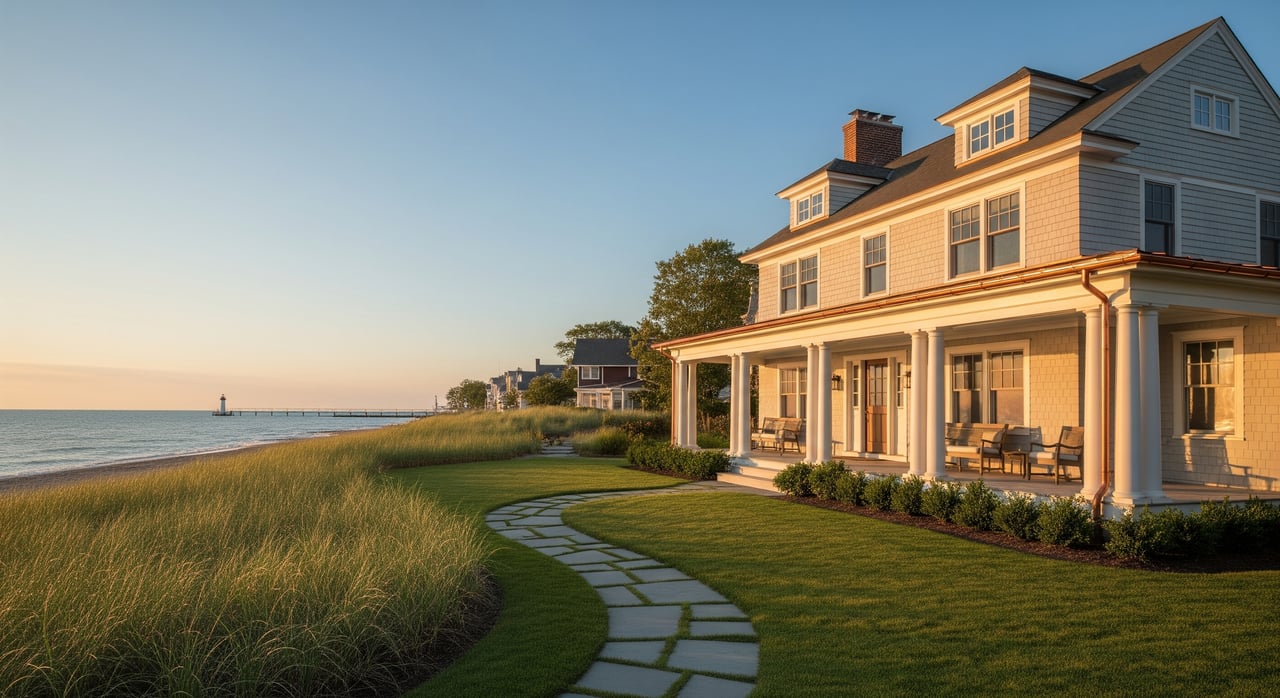
Picture yourself on a breezy porch facing Lake Michigan, coffee in hand, watching the light play across the water. If you are exploring homes in St. Joseph, you will see that same lakeside magic framed by many different architectural styles. Choosing the right one is about more than looks. It is about how each home performs in our coastal climate, what maintenance to expect, and what rules apply near the shore.
This guide breaks down the most common St. Joseph and Berrien County home styles, the features that make them work on the lake, and the questions to ask before you buy or sell. You will learn what to recognize from the curb, which upgrades matter, and how to navigate local regulations with confidence. Let’s dive in.
How to spot St. Joseph home styles
Victorian-era character (c. 1870–1910)
You will notice Queen Anne homes with asymmetrical facades, wraparound porches, and decorative spindlework. Italianate houses show off tall, narrow windows with hood moldings and deep roof brackets. A rare Second Empire may feature a mansard roof. Expect wood clapboard or shingle siding, tall windows, and high ceilings. Many of these homes have been preserved or renovated, and original ornamentation can be delicate. Restoring trim, windows, and staircases may take time and investment.
American Craftsman and Bungalow (c. 1905–1930)
Craftsman bungalows are easy to spot: low-pitched gables, wide eaves with exposed rafters, and tapered porch columns set on piers. Inside, you often find built-ins and practical floor plans. These homes are typically one to one-and-a-half stories with a modest footprint. In St. Joseph neighborhoods, they remain favorites for their warmth and livability, and many have been updated while keeping their character.
Colonial Revival and Neo‑Colonial (c. 1890–1950)
Look for symmetry, a centered front door framed by pilasters or a pediment, and multi-pane double-hung windows. Materials range from clapboard to brick. In our area, this style appears in both larger homes and modest infill, offering a classic profile that suits many streetscapes.
Tudor Revival (c. 1920s–1940s)
Tudor Revival homes feature steeply pitched roofs, decorative half-timbering, tall narrow windows, and prominent chimneys. Stone or brick often grounds the lower walls. You will find examples in neighborhoods that grew during the interwar period, where their storybook silhouettes add to the architectural mix.
Mid‑century Ranch and Modern (c. 1940s–1970s)
Ranch homes sit low and wide with attached garages and open, flexible plans. Mid‑century modern homes use flat or low-sloped roofs, large expanses of glass, and simple lines to blend indoors and outdoors. Around St. Joseph you will see many ranches inland, and a smaller number of mid‑century modern homes positioned to capture lake views and light.
Lakefront cottages and contemporary lake homes (various eras)
Traditional beach cottages are modest with wood siding or cedar shingles and generous porches or decks facing the lake. Some sit on raised foundations depending on site conditions. Newer lake homes often use modern materials, expansive glazing, and multi‑level outdoor spaces to maximize views. On certain parcels you may see seawalls, riprap, or bulkheads, which are coastal protection features subject to permitting and maintenance.
Accessory dwellings and multi‑unit waterfront
Near the downtown waterfront you will find converted older buildings, small cottage clusters, and newer infill that takes advantage of lake views. Some properties may include accessory units or multi‑unit configurations, which can be practical for hosting guests or creating rental income, subject to local rules.
Signature Lake Michigan features to know
- Porches and verandas: A defining feature in historic homes and beach cottages, porches provide sun and wind protection and extend living space toward the lake.
- Roof forms and materials: Gables are common, with low-pitched roofs in modern designs. In exposed locations, roofing quality and proper fastening are important for wind resistance.
- Siding and exterior materials: Painted wood clapboard, cedar shingles, brick, and limestone foundations are typical. Renovations often use fiber cement or vinyl for durability near the lake.
- Windows and doors: Large lake‑facing windows are common in newer homes, while historic homes may feature original double‑hung sash, leaded glass, or stained glass. Proper sealing and flashing help prevent water intrusion.
- Foundations: You will see masonry and poured concrete foundations inland, and in some shoreline settings, raised pier systems or elevated construction. Basements should be evaluated for moisture management and groundwater.
- Exterior detailing: Craftsman homes show exposed rafter tails and sturdy porch supports. Revival styles may include dentils, columns, and classical trim.
Coastal climate: what it means for your home
Lake Michigan shapes our weather, especially near the shore. Understanding the environment helps you plan maintenance and spot smart upgrades.
- Wind exposure: Waterfront and ridge lots experience stronger winds. Roofing, flashing, siding, and window quality matter more than in sheltered inland settings.
- Salt and humidity: Salt-laden air can corrode metal fasteners, HVAC components, gutters, and exterior fixtures. Paint and wood can wear faster near the water.
- Freeze–thaw cycles: Masonry and concrete can crack or spall if water penetrates and freezes. Proper drainage, flashing, and sealants are essential.
- Groundwater and frost depth: Foundations should address seasonal groundwater variations and frost heave. Good grading and drainage reduce water issues.
- Erosion and bluff stability: Shoreline parcels can face erosion risks. Existing seawalls or riprap alter natural processes and require monitoring and maintenance.
Regulations and insurance basics in Berrien County
Owning near the lake adds a layer of due diligence. You will want to confirm status with local and state authorities before planning changes or budgeting for insurance.
- Flood risk and insurance: Check FEMA flood maps to understand the property’s designation. Lakefront or near‑lake parcels may fall within a Special Flood Hazard Area, where lenders often require National Flood Insurance Program coverage. Ask for an elevation certificate if available and verify premium estimates early in your process.
- Shoreline permitting: Shoreline work such as seawalls, bluff stabilization, dredging, or filling may require permits from Michigan’s Department of Environment, Great Lakes, and Energy (EGLE), along with county or city approvals. Local shoreland and zoning ordinances can set setbacks and other limits.
- Historic districts and preservation: Some St. Joseph neighborhoods may have historic designation. Exterior changes in a local district can require design review. Confirm status with the City of St. Joseph planning or historic preservation offices.
- Zoning, setbacks, and utilities: Waterfront lots sometimes have overlay zones or special setback requirements. Older parcels may still be on septic systems. Verify sewer availability, septic permits, and service history during due diligence.
- Easements and riparian rights: Waterfront ownership can include riparian rights, but these are governed by state law and local ordinances. Confirm recorded easements for shared access paths, seawalls, or utilities with a title search and survey.
- Building codes and upgrades: If a home has recent renovations, check that work was permitted and inspected. Pay close attention to roof, foundation, HVAC, electrical, plumbing, additions, and decks.
Buyer checklist for showings and inspections
Use this quick set of questions and inspection points to stay organized when touring homes along Lake Michigan and in St. Joseph.
Key questions to ask
- Has the property ever flooded? Are there claims or documented mitigation steps?
- Is there a seawall, bulkhead, or riprap? When was it built or last repaired, and who maintains it?
- Are shoreline stabilization measures permitted and recorded? Any open code notices?
- What flood zone is listed on FEMA maps? Is there an elevation certificate?
- What is the roof age and condition? Are fasteners and flashing designed for coastal winds?
- Any visible salt-air corrosion on HVAC units, gutters, flashing, or fasteners?
- Has the foundation had water intrusion, settling, or frost heave? Any repair records?
- Is the property in a historic district with design review requirements?
- Is the home on septic or city sewer? If septic, when was it last inspected or serviced?
- Are there any easements or shared access that affect privacy or use?
Inspection checklist highlights
- Exterior cladding and trim, including siding condition and paint integrity
- Roof covering, flashing, gutters, downspouts, and attic ventilation
- Windows and doors for seal failure, storm panels, and water intrusion
- Foundation and basement for cracks, efflorescence, dampness, and sump systems
- HVAC age and outdoor unit corrosion; insulation and energy‑efficiency upgrades
- Mechanical systems and electrical panel capacity, especially in older homes
- Site grading and drainage away from the house; retaining walls and seawalls
- Evidence of past flooding or moisture, such as staining, replaced drywall, or mold
Renovation and value strategies for the lakeshore
Your investment should balance lifestyle, aesthetics, and resilience. Focus on changes that matter most in our lake environment.
- Historic charm vs. cost: Victorian and Craftsman homes often command strong interest for original woodwork, windows, and porches. Restoring decorative trim or specialty glazing can be costly, so budget carefully and prioritize weather protection and structural health.
- Lake views and outdoor living: Homes that orient living spaces to the lake and extend outdoors with decks, porches, and terraces tend to stand out. Thoughtful glazing and sun control improve comfort and protect interiors.
- Durable, low‑maintenance upgrades: Fiber cement siding, high‑performance windows, wind‑rated roofing, and corrosion‑resistant fixtures reduce long‑term upkeep. Insulation and efficient HVAC add comfort and value.
- Risk documentation: Buyers appreciate clear records such as elevation certificates, seawall permits, and engineered erosion control plans. Keep permits and warranties organized for smoother transactions.
Where to verify details and find examples
When you want to cross‑check designations, permits, or style histories, start with official sources and local records:
- City of St. Joseph planning department and historic preservation commission for zoning, shoreland rules, and historic district guidance
- Berrien County assessor, property records, building department, and county GIS for parcel data, permits, and tax history
- Michigan State Historic Preservation Office and the National Register of Historic Places for style descriptions and listings
- FEMA Flood Insurance Rate Maps for flood zones and guidance
- Michigan EGLE for shoreline and wetlands permitting information
- St. Joseph and Berrien County historical societies and archives for historic photos and neighborhood context
- Local MLS portals and recent listings for photographic examples and market comparisons
- NOAA and the National Weather Service for climate and shoreline weather patterns
Choosing the right style for your lifestyle
If you want timeless detail and walkable streets, a Victorian or Craftsman may fit. If you prefer single‑level living and open plans, a ranch is a good match. For modern minimalism with walls of glass, look for mid‑century or contemporary lake homes. If your goal is a low‑key beach retreat, a classic cottage near the water may be ideal.
Whichever direction you choose, align features with our coastal realities. Prioritize durable exterior materials, strong weatherproofing, and documented shoreline stewardship. With the right due diligence and guidance, you can enjoy the best of Lake Michigan living while protecting your investment.
Ready to compare styles, evaluate risk, and plan smart upgrades that boost value? Connect with Tammy Kerr for a design‑informed, data‑driven plan tailored to your goals on the West Michigan lakeshore.
FAQs
What home styles are most common in St. Joseph, MI?
- You will frequently see Victorian‑era homes (Queen Anne and Italianate), Craftsman bungalows, Colonial and Tudor Revivals, mid‑century ranches and modern designs, plus classic beach cottages and contemporary lake homes along the shoreline.
Will I need flood insurance for a lakefront home in St. Joseph?
- It depends on the FEMA flood zone for your parcel; many near‑lake properties fall within mapped hazard areas where lenders may require National Flood Insurance Program coverage, so verify early and request an elevation certificate if available.
Are there restrictions on renovating a historic home in St. Joseph?
- Possibly; if a property is within a local historic district or listed on the National Register, exterior changes may require design review or permits from the City of St. Joseph, so confirm status with planning and preservation staff before work.
How can I assess shoreline erosion or seawall condition when buying?
- Ask for permits and engineering documentation, look for signs of undermining or failure, and review maintenance history; speak with local authorities about past events and confirm responsibilities for any shared structures.
What maintenance is unique to Lake Michigan homes near St. Joseph?
- Expect quicker wear on paint and wood, corrosion on metal fixtures and HVAC units, the need for wind‑resistant roofing and flashing, diligent moisture control in basements, and regular inspection of decks and shoreline structures.