
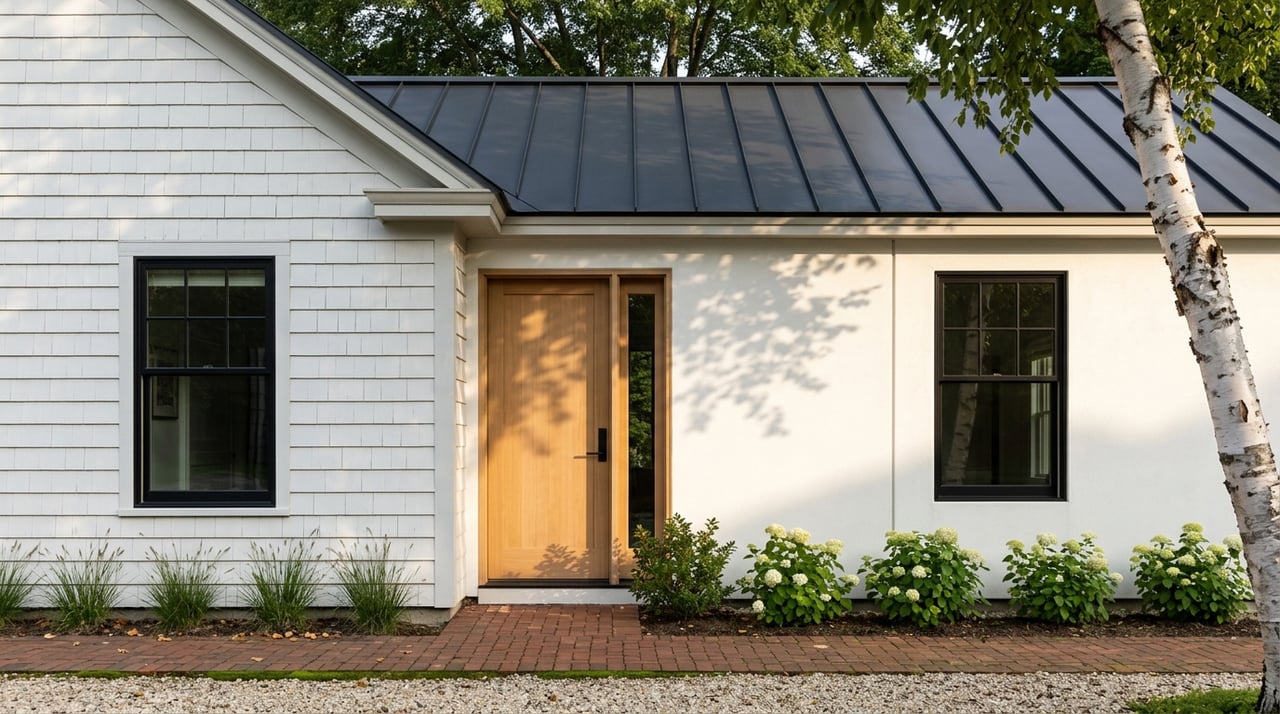
Wondering whether to restore a classic Saugatuck cottage or start fresh with a new build? In this market, that decision is rarely just about taste. It is about the lot, the rules, the timeline, and how much value the existing home already holds. If you are weighing a purchase, planning a renovation, or thinking long term about resale, this guide will help you sort through the tradeoffs. Let’s dive in.
Why This Choice Is Different in Saugatuck
In Saugatuck, the numbers alone tell you that not all homes are valued the same way. Recent public data shows an average home value around $620,251, a median sale price near $575,000 over the last three months, and a median listing price of about $724,900. That spread suggests condition, design quality, and location can strongly influence what a property is worth.
That matters if you are deciding whether to preserve a cottage’s charm or invest in a larger project. In some markets, tearing down and rebuilding is the easy answer. In Saugatuck, the better choice is often more site-specific.
Start With the Site, Not the Style
Before you focus on finishes, square footage, or layout ideas, look closely at what the property will allow. A beautiful concept only works if the lot, zoning, and review process support it.
Saugatuck uses layered permitting. The city’s building administration runs through Michigan Township Services, and separate permit applications may be required for building, electric, mechanical, plumbing, and water or sewer work. If the property sits in the Historic District, exterior work also goes before the Historic District Commission.
That review timing can affect your whole project. Planning Commission meetings are held on the third Thursday of each month, Historic District Commission meetings on the first Thursday, and Zoning Board of Appeals meetings on the second Thursday. If your plan needs more than one approval, it may move through several monthly cycles before construction begins.
When Restoring a Cottage Makes More Sense
Restoration often makes the most sense when the cottage already has strong character, a valuable location, and a footprint that works reasonably well for how you want to use it. In Saugatuck, that can be especially true on older lots where the existing home already fits the site better than a replacement plan might.
The local zoning code allows lawful nonconforming structures to continue, but there are limits. A nonconforming structure generally cannot be enlarged or altered in a way that increases its nonconformity. If it is damaged, reconstruction or restoration is generally limited to the original dimensions and gross finished floor area, including in special flood hazard areas.
That means an older cottage may have value beyond its charm alone. If it occupies a position on the lot that would be difficult to recreate today, restoration may be the more practical and lower-risk path.
Historic District Review Can Shape the Outcome
If your property is in Saugatuck’s Historic District, restoration is not simply a design exercise. Exterior changes are reviewed for consistency with the Secretary of the Interior’s rehabilitation standards.
In practice, that can affect details that many buyers might otherwise assume are flexible. Public Historic District Commission materials show approvals conditioned on items like window type and railing materials. In other words, you may be able to improve the home significantly, but the final result still needs to respect the character of the property and the district.
Modest Updates Often Work Better Financially
If resale matters, selective improvements may offer better value than a full gut job. National remodeling data for 2025 found that a new steel front door had 100% cost recovery, while closet renovation returned 83% and a new fiberglass front door returned 80%.
The same report showed that real estate professionals most often recommended painting the entire home, painting one room, and replacing the roof before selling. These are not flashy projects, but they are visible, practical improvements that buyers notice.
Regional cost benchmarks point in the same direction. In the East North Central region, a minor kitchen remodel costs about $27,005 to $28,458 and has resale around $27,318 to $32,141. A major kitchen remodel costs about $82,793 to $83,113 but returns only about $40,038 to $42,130 at resale.
For many Saugatuck cottages, that makes a strong case for targeted restoration instead of a full custom overhaul.
When Building New or Adding On Makes More Sense
A new build or major addition tends to make more sense when the lot can support it and your needs clearly exceed what the existing cottage can provide. If you want a very specific floor plan, more guest space, or a layout built for long seasonal stays, starting over may be the cleaner solution.
Still, more square footage does not always mean more flexibility. In Saugatuck, accessory structures and additional living space are regulated closely.
ADUs and Accessory Buildings Have Limits
Saugatuck allows accessory dwelling units on lots with an existing single-family detached dwelling, but the rules are specific. The ADU cannot exceed the lesser of 30% of the main dwelling’s gross finished floor area or 600 square feet. Only one ADU is allowed per lot, one extra parking space is required, and independent rental of the ADU requires special land use approval from the Planning Commission.
Detached accessory buildings are also controlled. New accessory buildings must stay at least 10 feet from other buildings, remain outside required setback areas, cannot exceed the ground-floor area of the main building, and need a zoning permit before installation.
So if your vision includes a guest cottage, studio, or rental component, you will want to confirm what is allowed before you buy or design.
New Construction Still Has to Fit the Site
Even new construction in Saugatuck is rarely fully free-form. Public review examples show that larger redevelopment projects may be negotiated around setbacks, access, and compatibility with the surrounding block.
That is especially important on waterfront or visually prominent sites. In Saugatuck, the lot often has as much say as the wish list.
Additions Are Often Lifestyle-First Projects
If you are considering an addition, it helps to be realistic about return on investment. Regional benchmark data shows a bathroom addition costing about $57,427 to $60,645 with resale around $30,613 to $32,347. A primary suite addition costs about $160,572 to $170,517 with resale around $54,514 to $55,097.
An ADU runs about $157,758 to $166,406 with resale around $64,636 to $68,656. These numbers suggest that additions are often best treated as lifestyle decisions rather than near-term resale plays.
For a full new build, a recent national survey found an average new single-family home sales price of $665,298, with $428,215 in construction cost and an average finished area of 2,647 square feet. That is not Saugatuck-specific, but it gives you a baseline before land, utilities, site work, and local permitting are added.
Floodplain and Nonconforming Issues Matter
In Saugatuck, floodplain rules can be just as important as the house itself, especially on river-adjacent or lakeshore properties. The city states that mapped flood hazard areas are regulated under the National Flood Insurance Program, and development in the floodway may require engineering analyses before permits are approved.
That can affect cost, timing, and design options. If the property is also nonconforming, restoration may be the simpler route because the existing footprint already has a legal history the city recognizes.
When a home sits in a flood-prone area, historic district, or constrained envelope, preserving what is there can reduce uncertainty. It may not always be the most exciting option, but it is often the one with fewer surprises.
A Practical Way to Decide
If you are trying to make the call, start with a simple filter: what do you need, what does the lot allow, and how long do you plan to keep the property? Those three answers usually narrow the path quickly.
Lean toward restoration if:
- The cottage has good bones and strong character
- The current footprint already works fairly well
- The lot is constrained by setbacks, floodplain issues, or nonconforming status
- Historic character is part of the property’s appeal
- Resale efficiency matters more than creating a fully custom home
Lean toward building new or adding on if:
- You need a layout the current house cannot realistically deliver
- The lot can support more square footage
- You want long-term personal use more than short-term return
- You are planning guest space, multigenerational living, or a more tailored lifestyle setup
If rental income is part of the plan, confirm the rules early. Saugatuck’s short-term rental regulations include annual licensing, reinspections, and district caps. If the idea involves an ADU, that rental path has its own approval requirements as well.
Where Design Strategy Adds Value
In a market like Saugatuck, design choices are not just cosmetic. Because pricing can shift meaningfully based on condition and design quality, the smartest improvements are often the ones buyers see, use, and feel right away.
That usually means focusing first on the roof, exterior envelope, circulation, and a plan that makes sense for the lot. In many cottages, calm, well-edited updates outperform overbuilding. The goal is not to erase the home’s identity. It is to improve function, respect the site, and make every dollar work harder.
A thoughtful decision here can protect both your experience of the home and its future marketability. That is where a design-aware, data-driven approach becomes especially helpful.
Whether you are comparing a charming fixer, a teardown candidate, or a property with expansion potential, the right answer in Saugatuck is usually the one that balances vision with what the site can actually support. If you want expert guidance on evaluating a cottage, lot constraints, resale tradeoffs, or renovation potential, schedule a personalized consultation with Tammy Kerr.
FAQs
Should you restore or rebuild a cottage in Saugatuck?
- Restoration often makes more sense when the cottage has character, a workable footprint, and site constraints such as historic review, floodplain issues, or nonconforming status. Rebuilding or adding on is usually a better fit when the lot supports it and you need a layout the existing home cannot provide.
Do Historic District rules affect cottage renovations in Saugatuck?
- Yes. If a property is in Saugatuck’s Historic District, exterior work is reviewed by the Historic District Commission, and approvals may include conditions related to materials and design details.
Can you add an ADU to a Saugatuck cottage property?
- Possibly. Saugatuck allows one accessory dwelling unit per lot with an existing single-family detached home, but size, parking, and approval rules apply, and independent rental requires special land use approval.
Do floodplain rules matter for Saugatuck cottage projects?
- Yes. On lakeshore or river-adjacent properties, mapped flood hazard areas can affect permitting, and development in the floodway may require engineering analysis before approvals are granted.
Are major additions worth it for resale in Saugatuck?
- Not always. Regional cost data suggests many additions are lifestyle-first projects, with resale recovery often well below construction cost, especially for larger suite additions and ADUs.